 Asab Al-Nizam
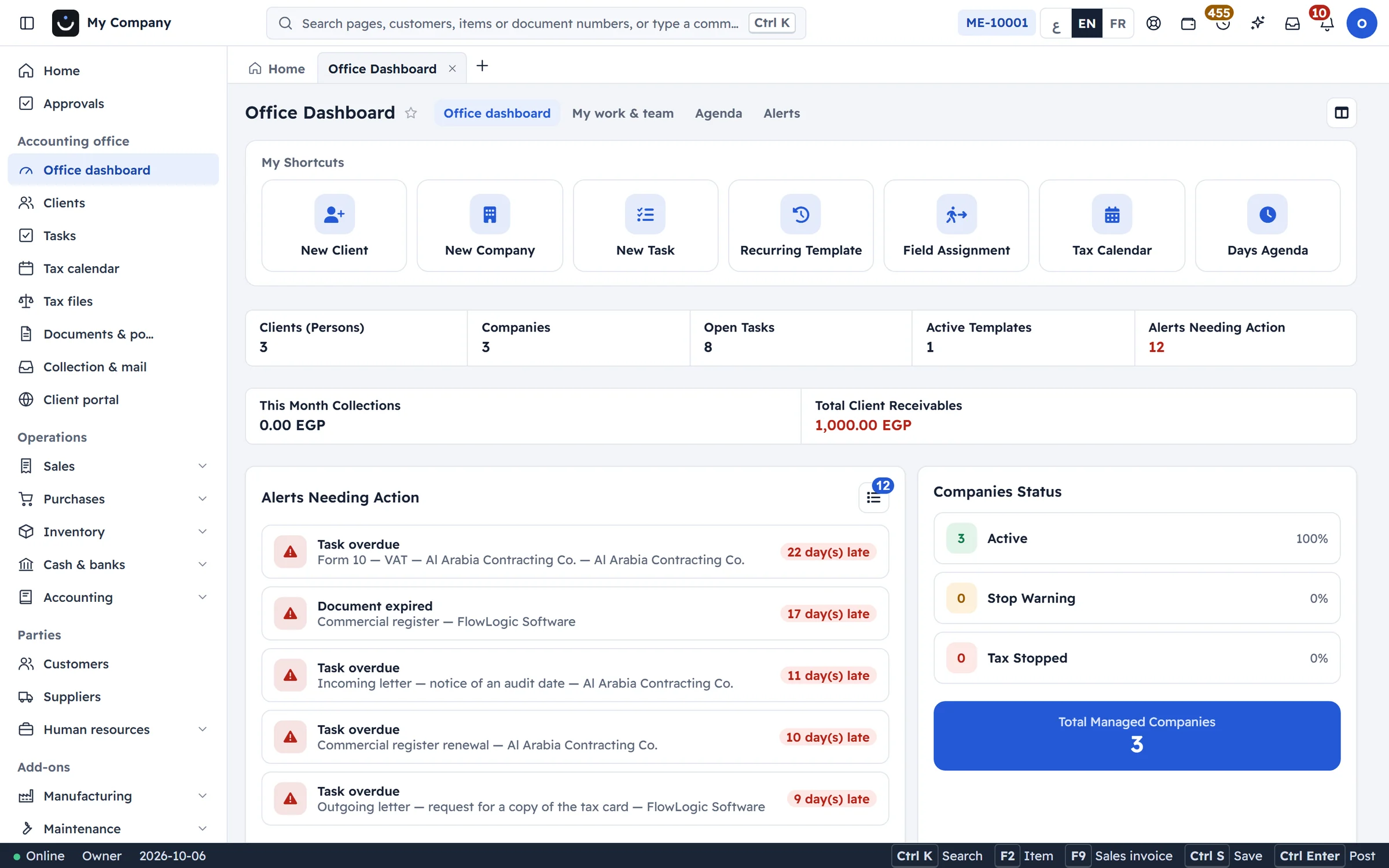
In most accounting offices the end of the month starts with the same question: where are the clients' documents? Purchase invoices not sent, bank statements missing, and a tax return due in a few days. The accounting itself does not take two weeks; the chasing does.
Start from the calendar, not the paperwork
When every client has a tax calendar that knows their filing dates, month-end turns from a surprise into a plan. The office can see today which clients owe a VAT return this month and which owe withholding, so requests go out early.
A task for every client, every month
Instead of a list in the accountant's head, each step becomes a task with an owner and a due date: collecting documents, recording, review and filing. The manager sees on the office dashboard what is late and with whom, without asking anyone.
Clients upload their own documents
When clients have a portal to upload documents and see what is still needed, the "I sent it yesterday" messages disappear. Every document arrives linked to the client and the month, and the follow-up card shows what has arrived and what is left.
What actually changes?
- The office knows on the 25th what is missing instead of discovering it on the 3rd.
- Work is shared across the team through tasks, not memory.
- Fees are collected on time because each client's billing is tied to the work done for them.
Closing in three days is not a race. It is the natural result of no longer losing the first ten days of the month looking for paperwork.