 Asab Al-Nizam
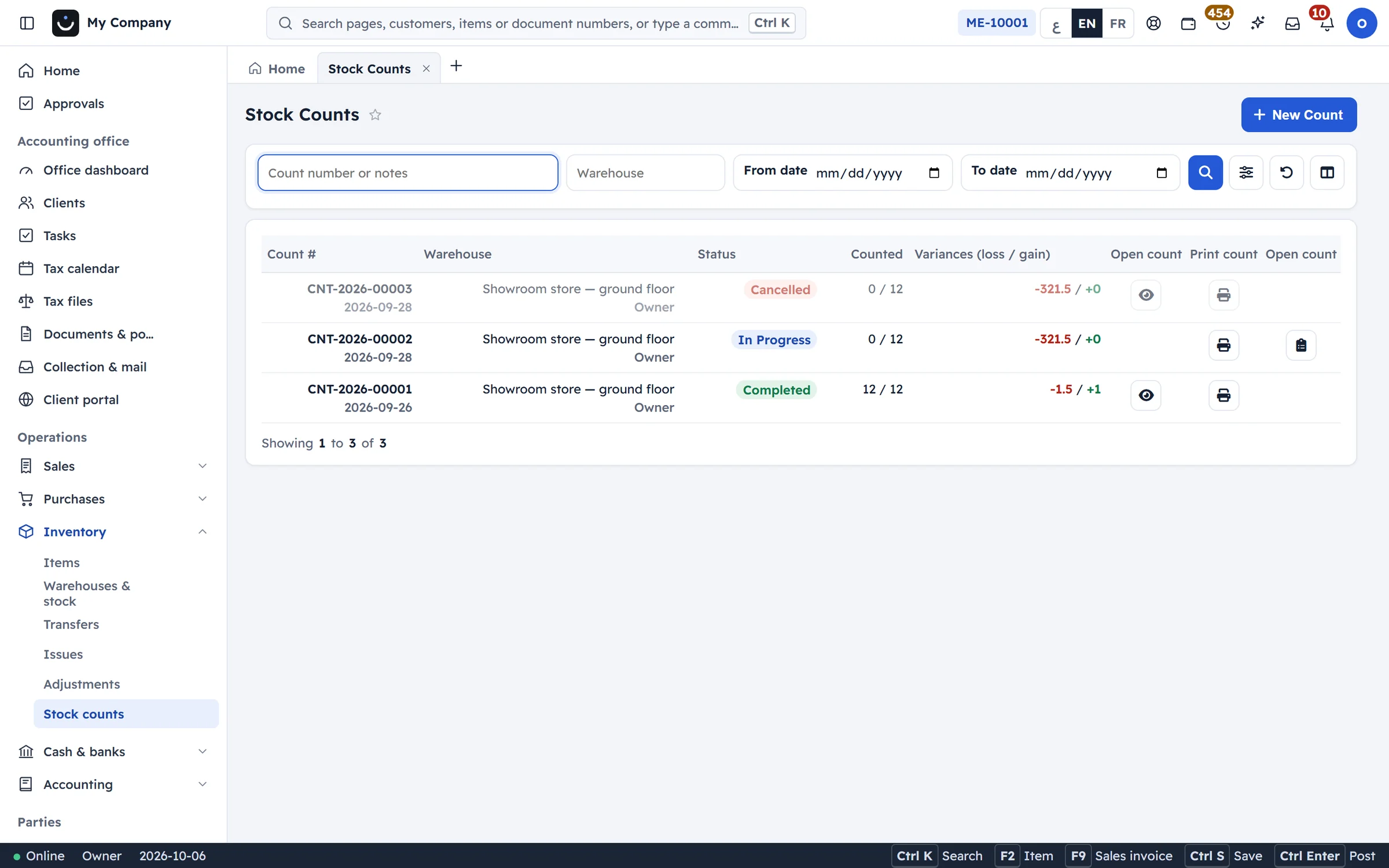
In many companies count day is a stressful day: the number on the shelf is one thing and the number in the books is another. The difference gets adjusted and forgotten until the next count. Yet the difference itself carries useful information if we read it.
Where does the difference come from?
- Goods issued without a document, then recorded later or forgotten.
- A transfer that left one warehouse and was never received in the other.
- Mixed units: a carton recorded as a piece, or the other way round.
- Returns that went back on the shelf without being recorded.
Item movements tell the story
When every movement is recorded with its document, you can open a single item and see its full history: every invoice, transfer and issue, with the balance after each movement. The question is no longer "how big is the difference?" but "in which movement did it start?".
Counting without stopping work
Partial counts on a group of items or a single warehouse reveal differences early without closing the warehouse for a whole day. The count is recorded on a count sheet, and the system compares it with the balance and shows the difference per item.
Settling with a clear entry
An approved difference is not silently erased. It is settled with an adjustment document that posts its entry to the inventory differences account, so management knows what differences cost this year, in which warehouse and for which items.
Once you see differences with their causes, the next count is calmer and the difference becomes a small number whose source you know.